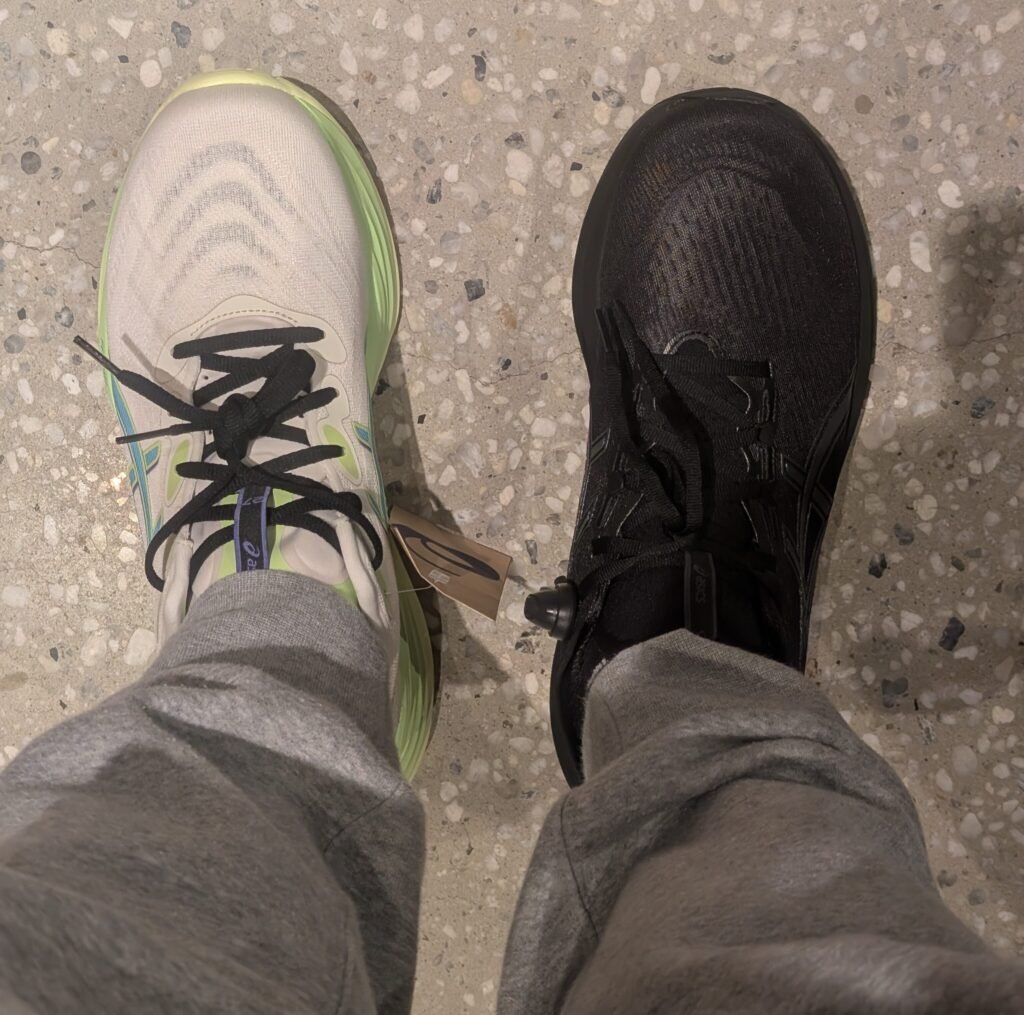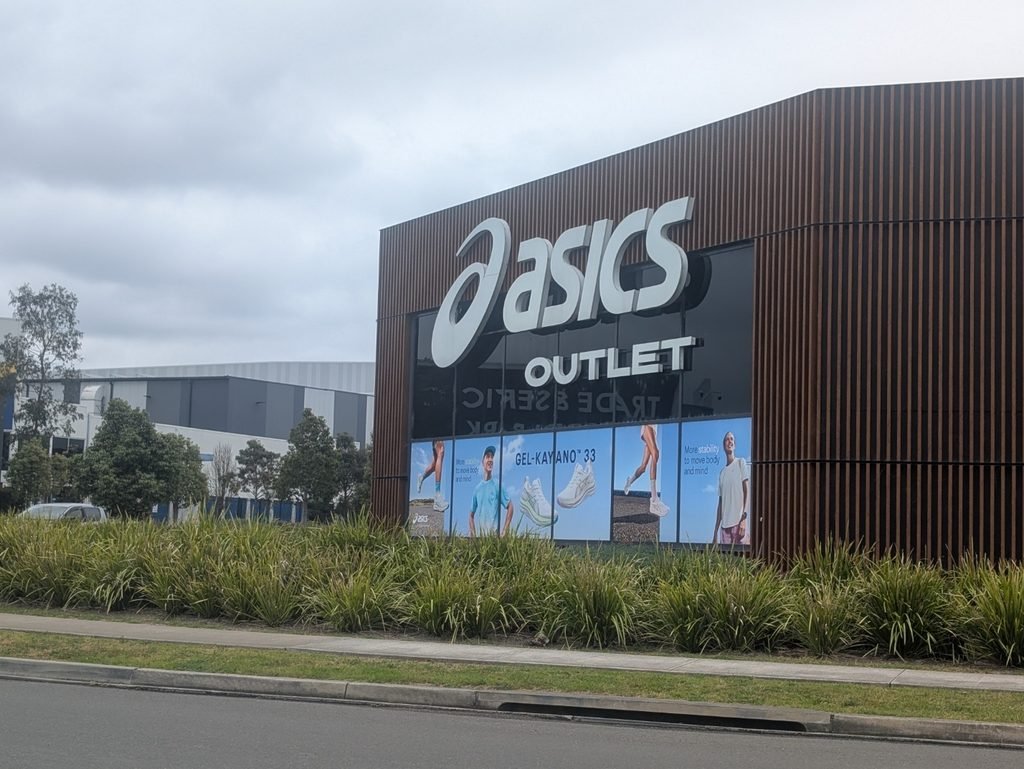
If you’ve been following along, you know my foot hasn’t been the same since my plantar fasciitis started last October. One habit that’s stuck with me through all of it is dropping into the Asics store at Marsden Park every time I have an opportunity which turns out as monthly trip — mainly bargain hunting and try next shoes on. I’ll grab a coffee from my beloved Starbucks Caramel macchiato, wander in, and spend twenty minutes squeezing my sore foot into whatever’s just landed on the wall.
Through all those visits, I’ve slowly worked out which parts of the Asics lineup actually make sense for a foot like mine — one that needs support so it doesn’t roll around, but also needs softness underneath so every step doesn’t feel like a complaint. Here’s what I’ve learned, and what I’d point you toward if you’re in the same boat.
The Asics Lineup Has Something for Every Kind of Runner
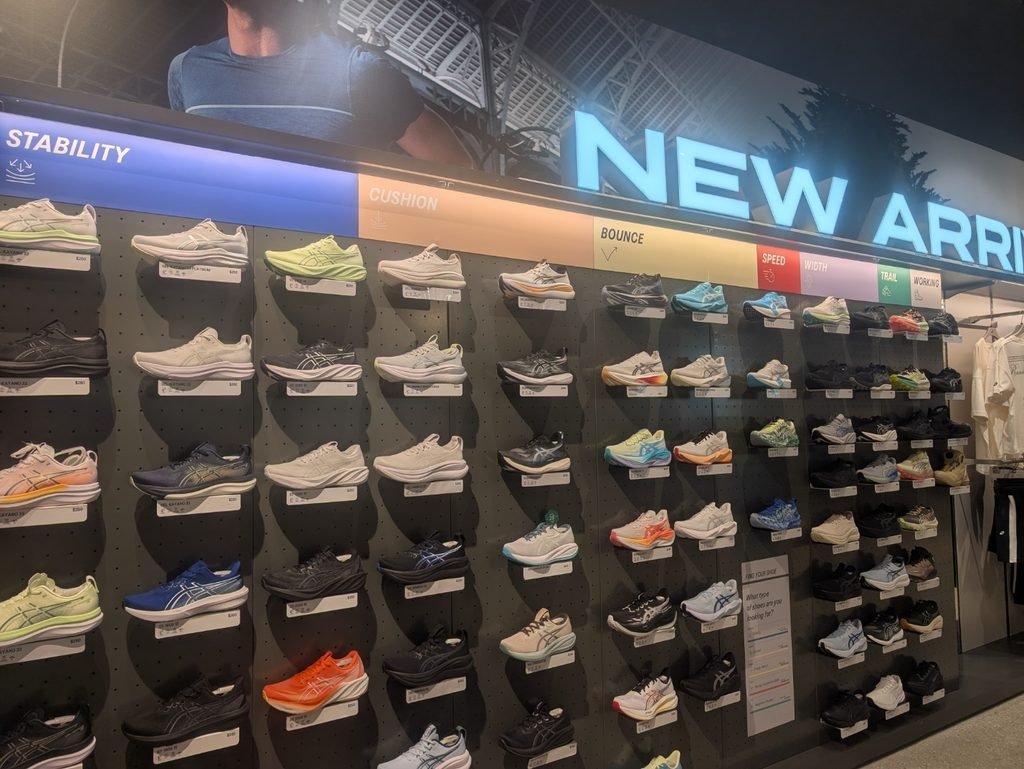
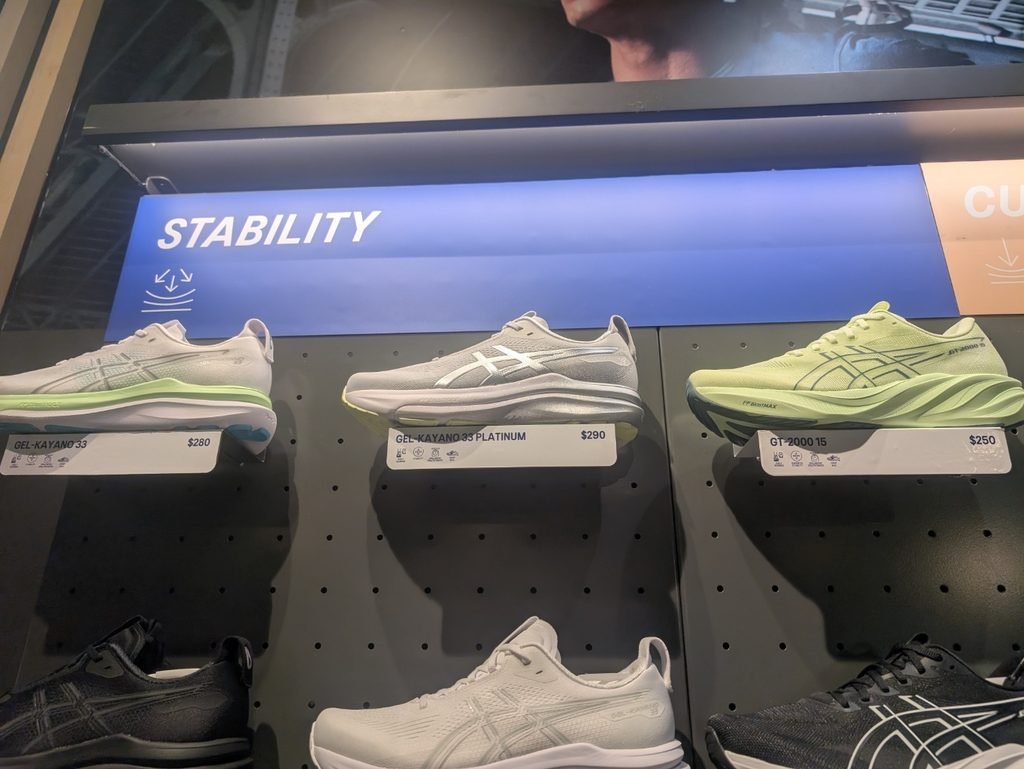
Every time I walk into the Marsden Park store, there’s a huge wall sorting every shoe into categories, and it’s honestly one of the clearest ways I’ve seen a running store lay things out. It’s split into Stability, Cushion, Bounce, and Speed (plus Width, Trail and Working shoes off to the side).
- Stability — Gel-Kayano, GT-2000, GT-1000
- Cushion — Gel-Nimbus, Gliderride Max, Gel-Cumulus
- Bounce — Megablast, Novablast, Superblast
- Speed — Magic Speed and Asics’ other racing-focused models
There’s even a little sign next to the wall that spells out the trade-off in plain terms: Stability is described as a “protective feel” for “peace of mind,” Cushion as a “soft feel” for a “relaxed mind,” Bounce as a “springy feel” for an “energised mind,” and Speed as a “fast feel” for a “confident mind.” It’s a good summary, actually — and it’s exactly why, every time I’m standing in front of that wall, my eyes go straight to the Stability and Cushion sections and stay there.
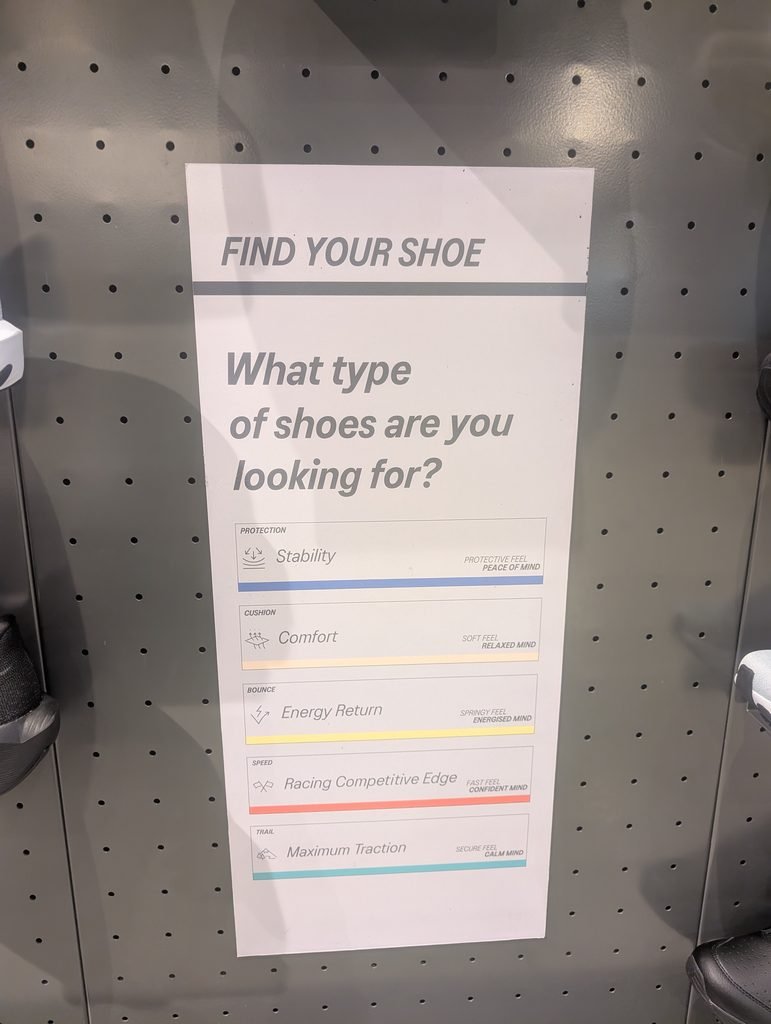
For a foot that’s still recovering, the Bounce and Speed shoes are built to chase exactly what I don’t need right now — energy return and fast turnover. What I need is what Stability and Cushion are built for: something that holds my foot in line so it’s not overworking, and something soft enough underneath that it’s not aggravating the sore spot on my sole with every step. So while the Bounce wall looks the most exciting, I’m the guy quietly working through the Stability and Cushion columns instead.
Why Stability and Softness Matter Together
Most people think “stability shoe” means firm and stiff. For plantar fasciitis, that’s actually the wrong instinct. What helped me was finding shoes that control excess movement in the foot — so the arch and heel aren’t twisting or overworking — while still landing soft, so the sore spot on the sole isn’t taking a hard hit with every stride.
Why I’m Staying Away From Carbon Racers (For Now)
If you spend any time watching running content online, you’ll notice almost everything is pointed at fast, experienced runners — carbon-plated super shoes, ultra-light racers, stiff rocker plates promising a “free” few seconds per km. Every second YouTube video seems to be someone reviewing the latest carbon racer. It’s easy to feel like you’re missing out if you’re not in one.
I’ll be honest: I’ve tried a pair on at Marsden Park just out of curiosity. For someone with a healthy, well-trained foot, I can see the appeal — that stiff plate and aggressive rocker are built to reward a strong, fast turnover. But for a foot like mine, still working through plantar fasciitis, that same stiffness and rocker just felt like it was forcing my stride into a shape my foot wasn’t ready for. Carbon plates and race-day foams aren’t built to absorb and adapt — they’re built to return energy as efficiently as possible, which is a different job entirely from protecting a sore, still-healing foot.
My honest opinion, for anyone in the same spot: skip the carbon shoes and race-day flats until your foot is actually strong and trained enough to handle that kind of stiffness. Stability and cushioning aren’t just a compromise for slower runners — they’re the shoes that let an injury actually calm down and let your foot rebuild the strength it needs, before you go anywhere near a shoe designed to push you faster.
The Gel-Kayano — My Actual Daily Shoe
This is the one I keep coming back to, and it’s what I currently run in (I moved to the Gliderride Max for a while, more on that below, but the Kayano’s still in rotation). The current Kayano pairs a softer foam on top with a firmer, more structured foam underneath, aiming for a ride that feels plush but still guides your stride. For me, that combination — soft where my sole needs it, structured where my ankle needs it — is exactly the balance a sensitive foot wants. It’s heavier than the GT-2000, but for anyone managing an injury, I think that trade-off is worth it.
The Glideride Max — the cushion Lineup
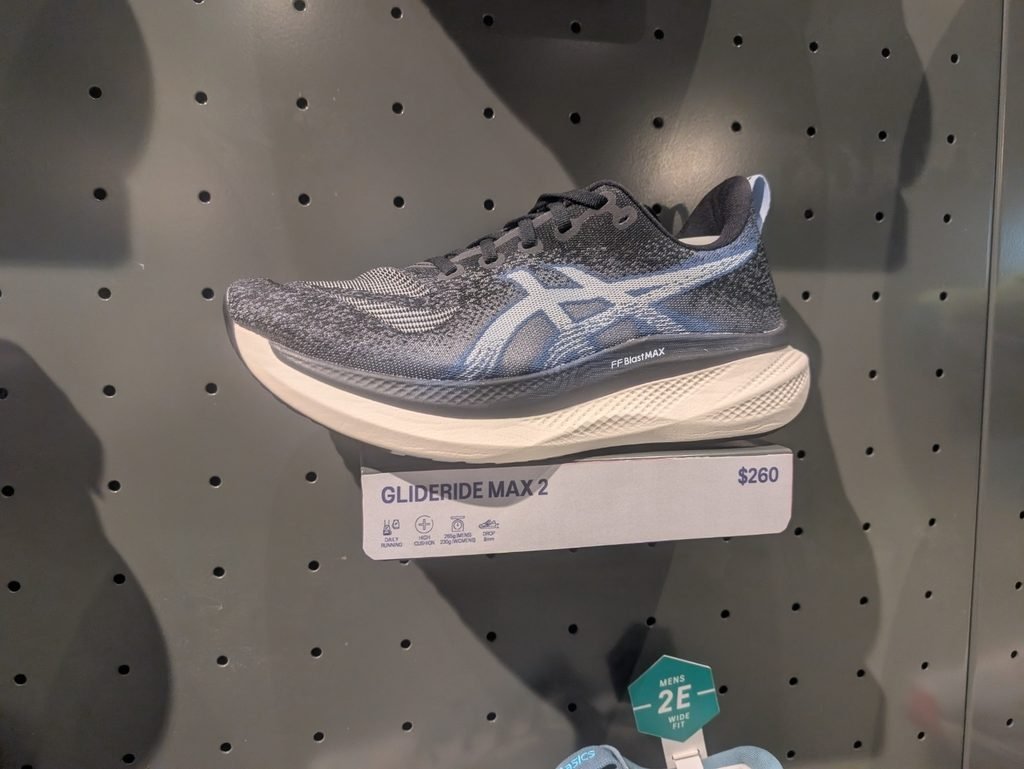
This is the shoe I actually switched into after the plantar fasciitis started, and it’s the one I’ve worn for about 12 months now. It uses the same FF Blast Max cushioning foam that shows up in Asics’ softest, most energy-returning shoes, so it feels noticeably plusher underfoot than the Kayano. It’s not marketed as a “stability” shoe in the strict sense, but the rocker shape does a lot of the stabilising work for you, which is part of why it’s worked so well for my foot.
My Honest Take, From Someone With a Sore Foot
If I had to rank them for a foot like mine: Glideride Max first or in that cushion range – it can be also Gel-Nimbus or Gel-Cumulus as it is important to continue running even slow pace. Gel-Kayano second for the best mix of support and softness for daily miles and Parkrun; GT-2000 third, if you’re newer to running and don’t need as much cushioning yet.
None of this is medical advice — it’s just what’s worked for me after more visits to that Marsden Park store than I’d like to admit. If you’re dealing with your own foot pain, the best thing you can do is actually go try shoes on in person. What feels supportive to me might feel completely wrong to you.
My next Shoes? try them on. compare
I am thinking of either Gel-Nimbus or Gel-Cumulus as I am still recovering. trying on and search what others says to decide in near future. Also as it is Factory outlet, they needs to be available with my size and design factor. however it will definitely in Cushion section.